
Baker’s Math
Pizza dough recipes often use baker’s math (baker’s percentages) to express ingredient proportions relative to the flour’s weight, which is invaluable for accuracy, consistency, and scalability. For more on Baker’s Math, Pizza Today’s article on baker’s percentages is a helpful resource.
Thickness factor, sometimes called dough loading factor, is how you control the thickness of your pizza. It’s expressed in grams of dough per square inch. A typical New York style pie falls between 0.075 and 0.1, and I personally prefer 0.083 to 0.085.
For a deeper dive into how this works in practice, Tom Lehmann published a solid article on the subject.
Dough Calculator
The Pizza Dough Calculator is a go-to tool for quickly customizing dough recipes based on pizza size and thickness. By inputting values like diameter and thickness factor, the calculator provides precise measurements for each ingredient, helping to achieve consistent results every time. There are many calculators available both online and in app stores. Pick one you like. I use this one.
My Dough Recipe
I use what is essentially the classic NY pizza dough recipe. From Lombardi’s, to Bellucci’s and many other old school NY pizzerias. This lower-hydration pizza dough formula (around 58–60%) is common for chewy, foldable NY-style crust with high-gluten flour like All Trumps.
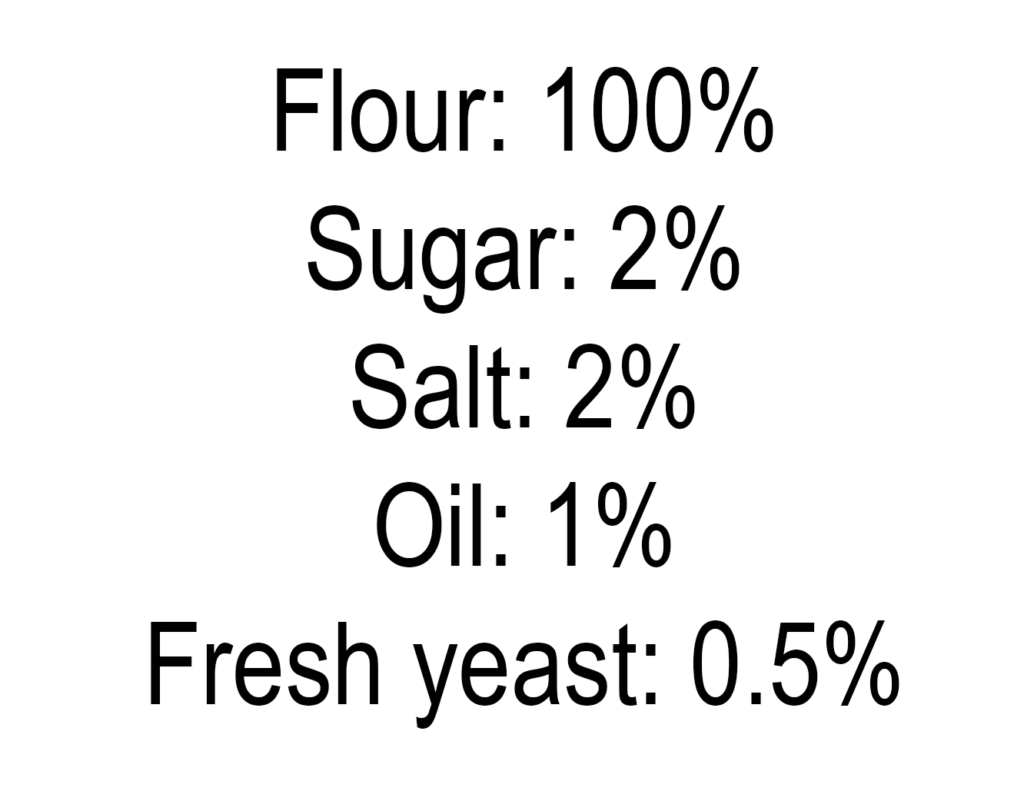
The dough is the starting point, mixed and prepared first before anything else. Once made, the dough will proof the refrigerator for 24-72 hours. During this time, frozen tomatoes can be transferred from the freezer to the fridge to thaw for sauce-making later.
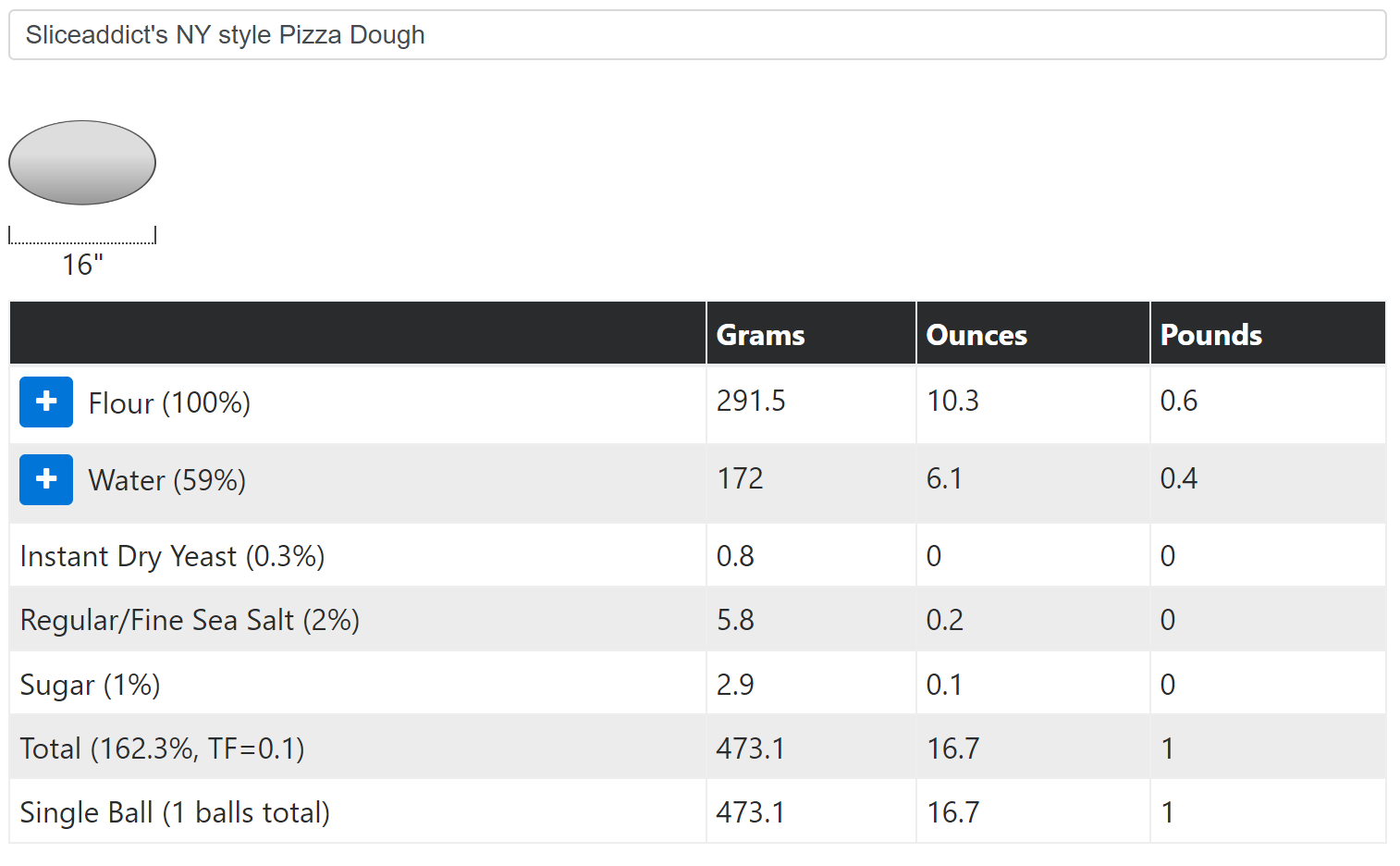
Dough Mixing and Handling
- Start by adding my salt to one side of the mixing bowl, and sugar to the opposite side. Then the water, stirring to dissolve. (this is the way Joe’s Pizza in NYC makes their dough)
- Add the flour, then IDY on top of the flour, mixing until incorporated. (there is no need to “proof” your IDY)
- Mix on medium-low for 8 minutes, resetting the dough ball if it begins to climb out of the bowl.
- After 8 minutes, remove the dough from the bowl and give it a few hand kneads to make sure it’s mixed well, then place the dough back into the bowl, cover, and let it rest for 30 minutes. It will still be somewhat shaggy at this point. During the 30 min rest you will perform a series of stretch and folds.
- At the 10-minute mark, perform a couple of stretch and folds, then repeat at the 20-minute mark.
- After 30 minutes, shape the dough into a ball, place it in an oiled container, and seal. Let rise at room temperature for 1 to 2 hours, then refrigerate for 24 to 72 hours.